A message from Proverbs: Work

Pastor Daryl preached a great message this morning (8-28-2011) on “WORK” using the text from Proverbs 12:11 — (ESV)  Whoever works his land will have plenty of bread, but he who follows worthless pursuits lacks sense.

Main Points:

  1. We are supposed to work.
  2. Great things come from hard work.
  3. There are different types of work — all are valuable.
  4. We need to work hard at the right things.
  5. Hard work does not equal great wealth.

Listen to the whole message (August 28, 2011 a.m.) at:    http://www.wfmc.net/audio/worship_2011_July-dec.html

TLT

Posted in Ideas to think about | Tagged | Leave a comment

Where am I? Where are we?

Time is zooming along and I am not writing much in the way of posts on this site.  Oh, well, the site is supposed to serve me and not the other way around.  The site is not my master.

So far this year, we have been in Ontario, New York, Pennsylvania, Ohio, Kentucky, Oregon, Washington, Indiana and Michigan.  Does not seem like a whole lot but some of these travels and the associated events have been pretty intense and most of these places we have been to more than once.

So far this year, we have moved from one country to another, processed all of the paperwork, furniture, and boxes associated with such a move (Joyce: correction, I still have “stuff” to process!), driven the truck for many miles, retired from a job, spent time caring for elderly parents, spent time caring for grandchildren, started a webpage, driven many, many miles around and around and back and forth.  I feel like I want to get off the train and stop still in one place for a while.  Maybe that will be next week!  . . . or the week after?  Joyce seems fearless and presses on through all of the happenings but we are both showing some “wrinkling” around the edges, so to speak.

I am writing this on a balcony in Indianapolis on my small netbook which is “fun” to type on.  But it is working and this technology is really amazing when I think back to a typewriter and using white-out or correction strips.  How did I survive through so much graduate study typing on Joyce’s portable Smith-Corona, using erasable paper?

Thank you for listening to my meandering musing.  May God bless you today and make this a good time in His grace. Remember that we do not find our reality in physical strength, in stock-market gyrations, in rumors of wars and actual wars, or in erratic weather.  Our strength comes from the Lord and His purposes and His everlasting arms    . . . . TLT

Posted in Ideas to think about | 2 Comments

My Mom and Alzheimer’s

Alzheimer’s is a terrible disease.  I watch my mother now.  Her hospital bed has been moved to the living room so that her many hours in bed will not isolate her from the rest of the family.  She is talking at times–words with little meaning,  now fidgeting with some unseen something between her fingers, now pulling on her sheet, apparently hallucinating–so restless, so restless.  It is very sad.  And I wonder if someday I will lie in that bed.

For Mom this moment has been a long time coming–years.  Only a few weeks ago she could feed herself and walk pretty much independently.  Now she can do almost nothing for herself.  Sometimes she is able to stand (with significant support), but almost as likely she will collapse–except for the strong arms holding her up.   The Hospice assistants have been so good, so supportive.  We are thankful.  Each day MaryBeth comes in to bathe and dress her, often to feed her.  In between we attend.  We watch.  We wait.

On Sunday Timothy and I will leave.  We will try to pick up our “real” life in Wilmore for a few weeks and then we will return here to Elmira.  And again it will be:  we attend; we watch; we wait.

Lord Jesus, hear our prayer for Mom.  Hold her in your arms. . . . jlt

Posted in Ideas to think about | Tagged | 7 Comments

Wrestling with Truth July 31 2011

EXODUS 32 — ATONEMENT

Summary  —  In our study of the main themes of the Old Testament, we have discussed the following topics:

Life  — Gen 1 — Creation
Curse — Gen 3 — Adam and Eve
Salvation — Gen 6 — Noah and the Flood
Judgment — Gen 11 — The Tower of Babel
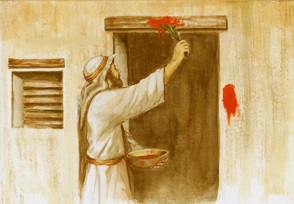
Blood — Ex 3 and 12 — Moses and the Passover
Law — Ex 20 — The Ten Commandments
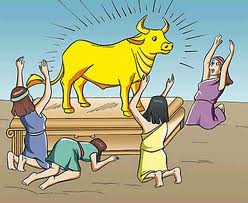
Atonement — Ex 32 — The Golden Calf

More on the concept of the atonement can be viewed at https://hillsidelaughter.com/theology/a-church-alphabet/

Questions to consider:
(Some questions from Colin Smith)

1.   What is atonement and why is it necessary?

2.   Do you think people experience guilt today? How do they deal with it?

3.   What did God say to the people?

4.   Why did Moses leave?

5.   What did the people do while Moses was away?

6.   Why did Aaron make tragic leadership decisions? Does this happen today?

7.   Why did the Israelites fall away from God so quickly? How could people be susceptible to the same temptation today?

8.   What did Moses do to punish the people?

9.   Why did God not simply forgive the people when they were sorry?

10.   How did Moses plead for the people?

11.   Three strategies proved to be unsuccessful in restoring God’s presence – being sorry, intercession of another human being, painstaking obedience.  Why are these ineffective and where do you see them in evidence today?

12.   What finally did restore God’s presence?

13.   What did Jesus do to restore our relationship with God?

Augustus Toplady’s hymn, Rock of Ages, expresses something of how atonement is accomplished.

Rock of Ages, cleft for me,
Let me hide myself in Thee;
Let the water and the blood,
From Thy wounded side which flowed,
Be of sin the double cure;
Save from wrath and make me pure.

Not the labor of my hands
Can fulfill Thy law’s demands;
Could my zeal no respite know,
Could my tears forever flow,
All for sin could not atone;
Thou must save, and Thou alone.

Nothing in my hand I bring,
Simply to the cross I cling;
Naked, come to Thee for dress;
Helpless look to Thee for grace;
Foul, I to the fountain fly;
Wash me, Savior, or I die.

TLT

Posted in Wrestling with Truth | Leave a comment

Grass, a flower, and a blessing

Since Joyce is away in New York, I am supposed to be in charge of watering the flowers.  Fortunately for me, the grass is still green in spite of the fact that there has not been much rain.  Usually the grass here is brown by this time of year–maybe that “brownness” will come in August.

However, there was a surprise in the back yard.  Yesterday, “the mysterious flower” appeared again, even without my watering that spot.  Amazing.  I wonder what it is?  It just shows up every year very politely.  Smile.

Here are some pictures of what the mysterious flower looks like.  I think that God sends it as a visual blessing to encourage me.  Could that be?

Then, there are the phrases from Mrs. Cecil Alexander’s hymn:  “All things bright and beautiful . . . the Lord God made them all . . .  each little flow’r that opens . . . He made their glowing colors . . .  ”

TLT

Posted in Creative Things, Ideas to think about | 2 Comments

Wrestling with Truth July 24 2011

Exodus 20  LAW

(summarized from Colin Smith with additional ideas from Peter Lewis and TLT)

How was this trip to Mt. Sinai different for Moses?

Why did God give the Ten Commandments to the Israelites?

Two possibilities:

  • God gave the Ten Commandments so that by keeping them the Israelites would become His people.
  • God gave the Ten Commandments to the Israelites because they were His people.

The whole bible, including the Old Testament, is a story of grace.

  • Sin is falling short of the glory of God
  • (Rom 3:23 NIV) “for all have sinned and fall short of the glory of God,”
  • Sin is breaking the law of God
  • (1 John 3:4 NIV) “Everyone who sins breaks the law; in fact, sin is lawlessness.”
  • Conclusion:  The “glory of God” parallels “the law”.

What do the Ten Commandments tells us about the character of God?

  • No other gods — He is the only God.
  • No idols — Images distract us from God’s glory.  God is alive.
  • No profanity — God is holy and will not be used.
  • Keep the Sabbath holy — God shares his rest.
  • Honor your parents — God created authority and parenthood and put us in families.
  • No murder –God made life
  • No adultery — God is faithful and protects marriage and families.
  • No stealing — God is trustworthy and respects property.
  • No lying — God is truth.
  • No coveting — God is content but appoints limits.

God’s ultimate purpose is to restore in us the true reflection of His glory.

  • Ezekiel 36:26 I will give you a new heart and put a new spirit in you; I will remove from you your heart of stone and give you a heart of flesh. 27 And I will put my Spirit in you and move you to follow my decrees and be careful to keep my laws.
  • (2 Cor 3:18 NIV) And we, who with unveiled faces all reflect the Lord’s glory, are being transformed into his likeness with ever-increasing glory, which comes from the Lord, who is the Spirit.

Comments on THOU SHALT NOT and YOU SHALL NOT (see American Heritage Dictionary)

  • SHALT is the archaic form of SHALL
  • Often used in place of will or should
  • Shall can be used as a simple future tense  (We shall arrive tomorrow.)
  • Shall can imply an order, promise, requirement, or obligation (You shall pay the fine.)
  • Shall can imply the will to do something  (I shall meet the deadline.)
  • Shall can indicate something inevitable  (That day shall come.)
  • In general, “shall” seems to include some level of moral obligation.

“YOU SHALL NOT STEAL”

  • Is this a command or a promise to a transformed thief?

TLT

Posted in Wrestling with Truth | Tagged | 1 Comment

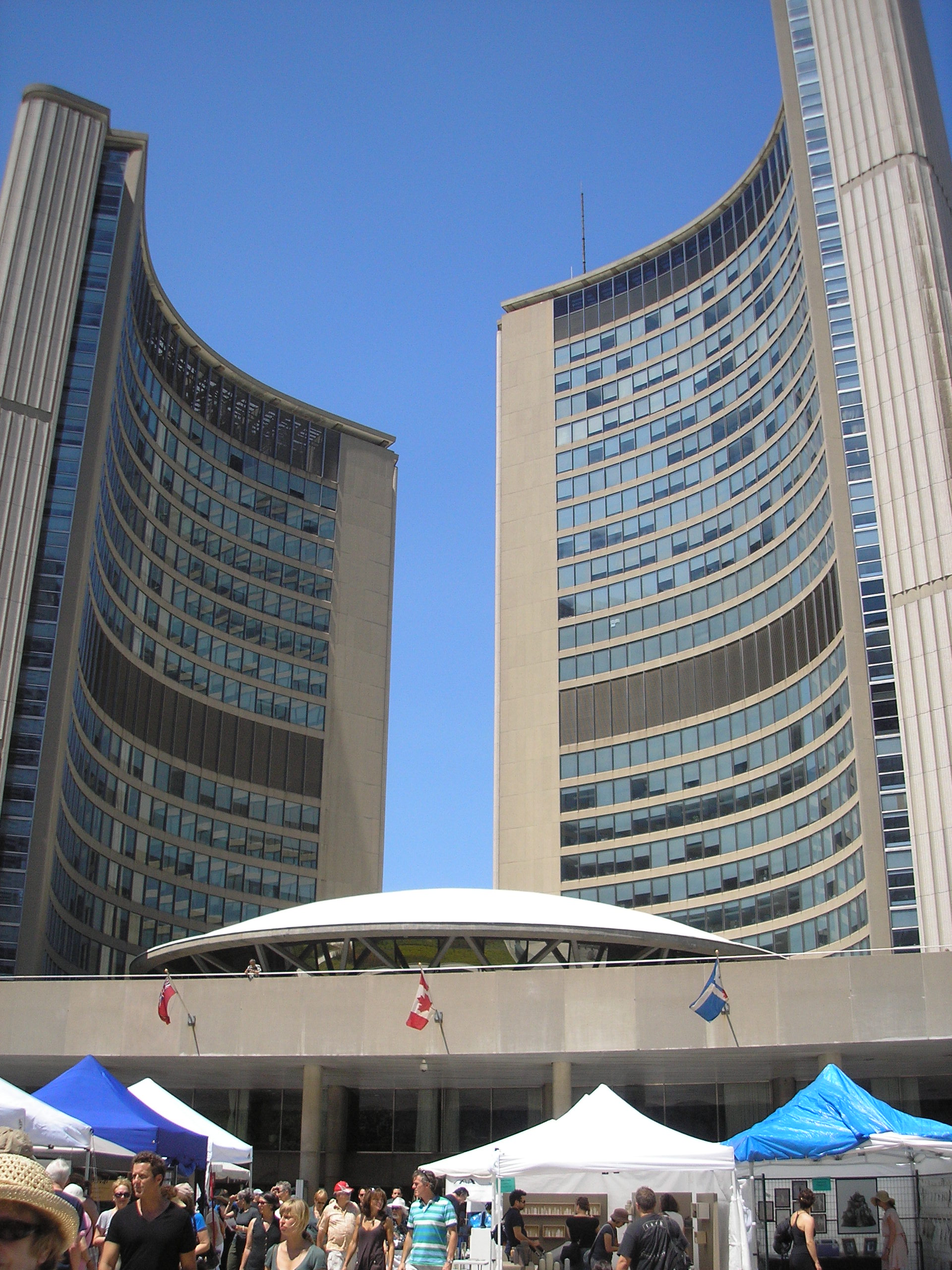
Reminders from Toronto

Here are some Reminders from Toronto — the basic outline of a message from July 17, 2011.

Toronto City Hall

  1. CITY — wherever you go there are lots of people
  2. WORK — wherever you go there is a lot of work to be done
  3. CHANGE — wherever you go there is need for change — real change takes a lot of time and energy
  4. LOVE — wherever you go there are people who need lots of love and encouragement
  5. HOME — wherever you go there still needs to be a place called home, if you have such a place — appreciate what you have
  6. GOD — God is at work everywhere but it looks different
  7. GOD — God is at work everywhere and it looks different but the work is really the same

Or, you can listen to the whole message (July 17, 2011) at:

http://www.wfmc.net/audio/worship_2011_July-dec.html

TLT

Posted in Ideas to think about | Tagged | Leave a comment

Wresting With Truth July 17 2011

BLOOD  Genesis 12

(outline from Derek Tidball, The Message of the Cross)

What does “exodus” mean?

Why could it be a problematic concept?

  • exodus without passover
  • liberation without the blood
  • salvation without the sacrifice
  • freedom without the cross

What does the Passover account reveal about the nature of God?

  • the faithfulness of God to his word
  • the compassion of God for his people
  • the justice of God among the nations
  • the power of God over the world

What are the verbs of deliverance (Brueggemann)

  • brings out
  • rescues
  • delivers
  • saves
  • redeems

What are God’s instructions?  (the substance of the Passover)

  • a time is set
  • a victim is chosen
  • the blood is applied
  • the flesh is eaten

What are the achievements of the Passover

  • judgment for a sinful people: God is judge (v. 29)
  • defeat for an idolatrous people: God is living (v. 12; 1 Peter 1:18-19)
  • protect for a threatened people:  God is redeemer (v. 20)
  • deliverance of an oppressed people:  God is Savior (v. 51)
  • creation of a holy people:  God is Lord (ch. 12)

TLT

Posted in Wrestling with Truth | Tagged , | Leave a comment

The church alphabet

Art work by Lorne LeGrow

The Church Alphabet is a 26-chapter primer of basic theological terms.

Each chapter includes:

  • The term
  • The Scripture
  • The thought
  • The song
  • The question
  • The experience

Chapters reflecting on ATONEMENT and BREAD are now posted.

Click on  THE CHURCH ALPHABET  to have a look.

TLT

Posted in Ideas to think about | Tagged , | 1 Comment

Wrestling With Truth July 10 2011

JUDGMENT: the account of the building of the Tower of Babel in Genesis 11
(some comments summarized from David Atkinson, The Message of Genesis 1 – 11).

When a community steps outside of the ways of God, we encounter:

  • the spread of disorder
  • various forms of confusion
  • fractured relationships
  • failure of communication
  • increased isolation

We see in this passage

  • the beginnings of civilization
  • the growth of technical skills

and the implications of

  • sufficient architectural and mathematics skills
  • sufficient political will for a corporate endeavor

There is a continuation of the violation of the boundaries set by God, which have already been seen in the cases of

  • Adam and Eve (disobedience; Genesis 3)
  • Cain and Abel (murder; Genesis 4)
  • Lamech (arrogance and vengeance; Genesis 4)
  • Corruption (Genesis 6)

Humans are not to grasp what is God’s.

“Our human sin is when we fail to recognize that God is God, and we try, both individually and corporately to take God’s place” (Atkinson, 178).

See Isaiah 14:13-15 — Isaiah makes the same point against the king of Babylon.

It is not that technology in itself is bad. The problem is the technological pride and technological culture that develops when we come to understand ourselves as

  • technologists
  • constructionists
  • makers
  • and as homo faber – the man who makes

Science gets swallowed up by technology.
God is no longer at the center; constructionist man tries to place God’s autonomy at the center.
Propaganda and ideology are used to generate the feeling of community. These become substitute social ties which attempt to replace God as the lost center. God steps in and allows disintegration and frustration to take place.

In all of this “. . . we are left wondering how grace will take the initiative” (Colin Smith).

There is however the hope of a restored community. The person around whom this hope (covenant) focuses is Abraham.

God takes the initiative with Abraham.

(Heb 11:8-10 NIV) By faith Abraham, when called to go to a place he would later receive as his inheritance, obeyed and went, even though he did not know where he was going. By faith he made his home in the promised land like a stranger in a foreign country; he lived in tents, as did Isaac and Jacob, who were heirs with him of the same promise. For he was looking forward to the city with foundations, whose architect and builder is God.

G. Campbell Morgan suggests that the tower of Babel is the story of “the mystery of lawlessness” that operates repeatedly in human society and history. It continues to cause brokenness and enmity until it is finally destroyed as noted in Rev 18:21.

(Rev 18:21 NIV) Then a mighty angel picked up a boulder the size of a large millstone and threw it into the sea, and said: “With such violence the great city of Babylon will be thrown down, never to be found again . . . ”

In the final scene of the story of salvation, the prideful and fractured city of Babylon is finally replaced by the Holy City.

Using the words of Revelation, Frederick Edward Weatherly (1848-1929) writes in the final stanza of his great anthem:

And once again the scene was changed,
New earth there seem’d to be,
I saw the Holy City
Beside the tideless sea;
The light of God was on its streets,
The gates were open wide,
And all who would might enter,
And no one was denied.
No need of moon or stars by night,
Or sun to shine by day,
It was the new Jerusalem,
That would not pass away,
It was the new Jerusalem,
That would not pass away.
“Jerusalem! Jerusalem!
Sing, for the night is o’er!
Hosanna in the highest,
Hosanna for evermore!
Hosanna in the highest,
Hosanna for evermore!”

. . .  TLT

Posted in Wrestling with Truth | Tagged | Leave a comment