
Click here to read article: EVIL

Click here to read article: EVIL
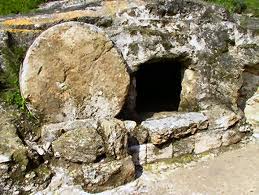 Easter Morning —
St. Mark tells us that as the women approached the tomb on Easter morning, they had a question:
(Mark 16:1-3 NIV) When the Sabbath was over, Mary Magdalene, Mary the mother of James, and Salome bought spices so that they might go to anoint Jesus’ body. {2} Very early on the first day of the week, just after sunrise, they were on their way to the tomb {3} and they asked each other, “Who will roll the stone away from the entrance of the tomb?”
In commenting on this passage. Halford E. Luccock in the Interpreter’s Bible (1951, vol. 7, p. 912) makes the following insightful observation (click below to enlarge):
TLT
Click here to read article: DOCTRINE
 Scripture: 1 Corinthians 1:18 – 2:2
The Message of the Cross
For the message of the cross is foolishness to those who are perishing, but to us who are being saved it is the power of God (1 Corinthians 1:18 NIV).
William Temple says that “seeing the Cross helps to feed my mind with the truth of God.” Similarly, in I Corinthians, the apostle Paul argues that wisdom and power are to be found in the cross.
The truth of God is to be found not in the wisdom of the present age but in the radical and scandalous nature of the cross. It seems to be an insult to our sensibilities that through the blood shed on the cross we can indeed gain newness of life. Yet, William Cowper’s words ring true:
There is a fountain filled with blood
Drawn from Immanuel’s veins;
And sinners, plunged beneath that flood,
Lose all their guilty stains.
The cross expresses the truth of God’s saving work–yes, but it is also the truth of discipleship. Seeing the cross should speak to our minds directly of our cross-carrying responsibilities. The call of Jesus is clear: “If anyone wishes to come after me, let him deny himself, and take up his cross daily, and follow me” (Luke 9:23). And similarly, “Whoever does not carry his own cross and come after me cannot be My disciple” (Luke 14:27).
Let us see the cross; let its truth be expressed in our lives; and let us walk by way of the cross since that way leads home.
TLT
 Scripture: 2 Corinthians 8:9; Philippians 2
Becoming Poor
For you know the grace of our Lord Jesus Christ, that though he was rich, yet for your sakes he became poor, so that you through his poverty might become rich. (2 Cor 8:9 NIV).
Here is another marvelous definition of “grace.” It is the movement from riches to poverty; from heavenly splendor to human limitation. In that process, Jesus gives up “equality with God” to gain “the very nature of a servant, being made in human likeness” (Phil 2:7).
How can this be gain? It can be gain only because it is God in Christ who is bringing about this mysterious change.
This great identifying work of God is not only real but sufficient and I can therefore move as William Sleeper writes in his grand gospel song:
Out of my bondage, sorrow, and night,
Into Thy freedom, gladness, and light,
Out of my sickness, into Thy health,
Out of my want and into Thy wealth,
Out of my sin and into Thyself,
Out of my shameful failure and loss,
Into the glorious gain of Thy cross,
Jesus, I come; Jesus, I come to Thee.
Byron Carmony puts it this way:
His were the planets and stars in the sky;
His were the valleys and mountains so high;
His, all earth’s riches from pole unto pole;
But He became poor to ransom my soul.
Through the incarnate Jesus’ self-emptying sacrifice on the cross, I can receive the grace needed to be transformed. As I allow Jesus to remold me, I can allow him to absorb the “bondage, sorrow, and night” and replace it with His “freedom, gladness, and light.” This is indeed the work of Christ on the Cross!
(2 Cor 9:15 NIV) Thanks be to God for his indescribable gift!
TLT
THE SCRIPTURE
The Pharisees came and began to question Jesus. To test him, they asked him for a sign from heaven. {12} He sighed deeply and said, “Why does this generation ask for a miraculous sign? I tell you the truth, no sign will be given to it.” {13} Then he left them, got back into the boat and crossed to the other side. (Mark 8:11-13 NIV)
THE COMMENT
from Abba Felix, one of the desert fathers
Some brothers . . . went to see Abba Felix and they begged him to say a word to them. But the old man kept silence. After they had asked him for a long time he said to them, “You wish to hear a word?” They said, “Yes, abba.” Then the old man said to them, “There are no more words nowadays. When the brothers used to consult the old men and when they did what was said to them, God showed them how to speak. But now, since they ask without doing that which they hear, God has withdrawn the grace of the word from the old men and they do not find anything to say, since there are no longer any who carry their words out.” Hearing this, the brothers groaned, saying, “Pray for us, abba.” [Benedicta Ward, The Desert Christian, p. 242]
TLT
Mark 7
verse 2 — “they saw”
verse 6 — How is honoring God with “the lips” different from honoring him with “the heart”?
verse 12 — “making void” or “null”
verse 15– “outside”
verse 24 — “And he entered a house and did not want anyone to know, yet he could not be hidden.”
Kierkegaard speaks of the “contemporaneity of Christ”; Jesus is always present.
Bonhoeffer says that Jesus’ presence is a”who” rather than a “how” question. Rather than getting stuck in the “how is this possible” mode, we should reaffirm that Jesus is with us because of “who he is” as God’s eternal Son.
H. E. Luccock writes that Jesus cannot be hidden:
TLT
 | Melanie Kierstead on Becoming Poor |
 | Jane Wang on Becoming Poor |
| Kierstead, Melanie on New Beautiful Cushions |
 | Sandylegrow on Jeremiah |
 | adrieldriver on Jeremiah |

 Hillside Laughter